
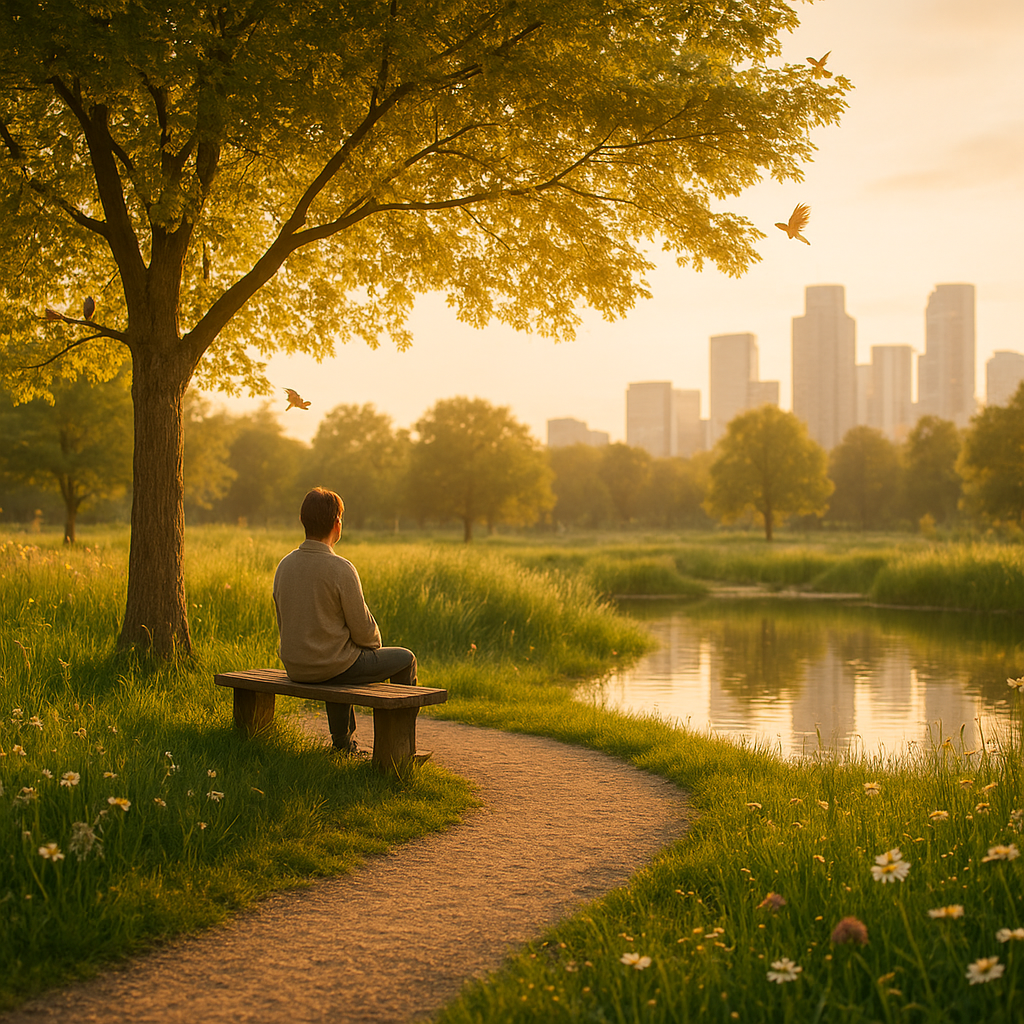
Step outside on your lunch break, even for ten minutes. Find a patch of grass, a tree-lined street, or a small park. Notice what happens to your breathing, your shoulders, the pace of your thoughts. Something shifts — almost immediately. That quiet recalibration isn’t coincidence or imagination. It’s your nervous system responding to something it was built to need.
Urban nature — the green spaces, waterways, trees, and living ecosystems woven into city environments — has become one of the most researched topics in public health and urban planning. And what the research keeps telling us is both simple and profound: access to nature in the places where we live and work has a measurable, meaningful impact on how we feel, how we function, and how we relate to one another.
This article explores why urban nature matters so much, what it does to the human mind and body, and how cities and individuals alike are beginning to take it seriously as a cornerstone of modern life.
What Does Urban Nature Actually Mean?
Before diving into the science, it’s worth defining the term. Urban nature refers to all the natural elements found within built-up environments — cities, towns, and suburban areas. This includes:
- Public parks and green spaces
- Street trees and roadside vegetation
- Rivers, canals, ponds, and coastal areas within or near cities
- Community gardens and allotments
- Green roofs, living walls, and courtyard gardens
- Urban woodlands and nature reserves
- Even window boxes and houseplants, in the domestic sense
It’s not about wilderness. Urban nature is about the integration of living, breathing ecosystems into the fabric of everyday human environments. And as more of the global population moves into cities — the United Nations estimates that by 2050, nearly 70% of people worldwide will live in urban areas — this integration becomes less of a luxury and more of a necessity.
The Science Behind Nature’s Effect on Human Wellbeing
There is now a substantial and growing body of scientific evidence connecting nature exposure to positive health outcomes. Research published in journals including The Lancet, Science of the Total Environment, and various NIH-backed studies has consistently found that people with regular access to green and blue spaces report better mental health, lower stress levels, and improved physical health markers.
Mental Health and Emotional Regulation
One of the most well-documented effects of nature exposure is its impact on mental health. A landmark study from King’s College London found that seeing trees, hearing birdsong, and encountering other natural elements in urban settings was associated with improved mental wellbeing for up to eight hours after the experience. These effects were observed in people already living with depression and anxiety — not just the general population.
Nature appears to help regulate what psychologists call rumination — the tendency to replay negative thoughts in a loop. A Stanford University study found that people who walked for 90 minutes in a natural setting showed significantly reduced neural activity in areas of the brain associated with rumination, compared to those who walked along a busy road. This kind of mental quieting is increasingly important in an era defined by information overload and chronic low-level stress.
Does Being in Nature Increase Dopamine?
This is a question that comes up often, and the short answer is: it appears to, though the mechanisms are nuanced. Nature exposure has been linked to increases in serotonin, dopamine, and endorphins — neurotransmitters associated with mood, motivation, and pleasure. Sunlight exposure, physical activity in green spaces, and even the sight of natural fractals (the repeating patterns found in leaves, branches, and water) have all been shown to trigger positive neurochemical responses.
Interestingly, research has also connected nature exposure to reduced levels of cortisol, the body’s primary stress hormone. Studies measuring cortisol in saliva have found lower levels in participants who spent time in forests or parks compared to urban control groups — a physiological marker of genuine stress reduction, not just a subjective feeling of calm.
Physical Health Benefits
The benefits aren’t limited to mental health. Access to urban green spaces is associated with:
- Lower rates of cardiovascular disease
- Reduced risk of type 2 diabetes
- Improved immune function
- Lower rates of obesity (partly through encouraging physical activity)
- Better sleep quality
- Faster recovery from illness and surgery
The last point is particularly striking. A now-famous study by environmental psychologist Roger Ulrich found that hospital patients whose windows looked out onto trees recovered faster, needed fewer pain medications, and had fewer complications than those whose windows faced a brick wall. Nature, it turns out, is not just pleasant — it is genuinely therapeutic.
How Urbanisation Has Distanced Us from Nature
Understanding why urban nature matters also requires understanding what we’ve lost — and continue to lose — as cities expand. Urbanisation fragments natural habitats, replaces permeable green surfaces with concrete and tarmac, and reduces biodiversity in ways that affect not just wildlife but human experience.
In the UK, research has shown that children today spend significantly less time outdoors than their parents did at the same age. One survey found that the average British child spends less than an hour outside each day — far below what health organisations recommend. Meanwhile, rates of anxiety, attention difficulties, and depression among young people have risen sharply over the same period.
This is not to suggest a simple cause-and-effect — modern life is complex, and these trends have multiple drivers. But the correlation is striking, and it aligns with what biologist E.O. Wilson described as biophilia: the innate human need to connect with other living things. When that connection is severed or diminished, something in us feels it.
Urban Nature, Social Connection, and Community
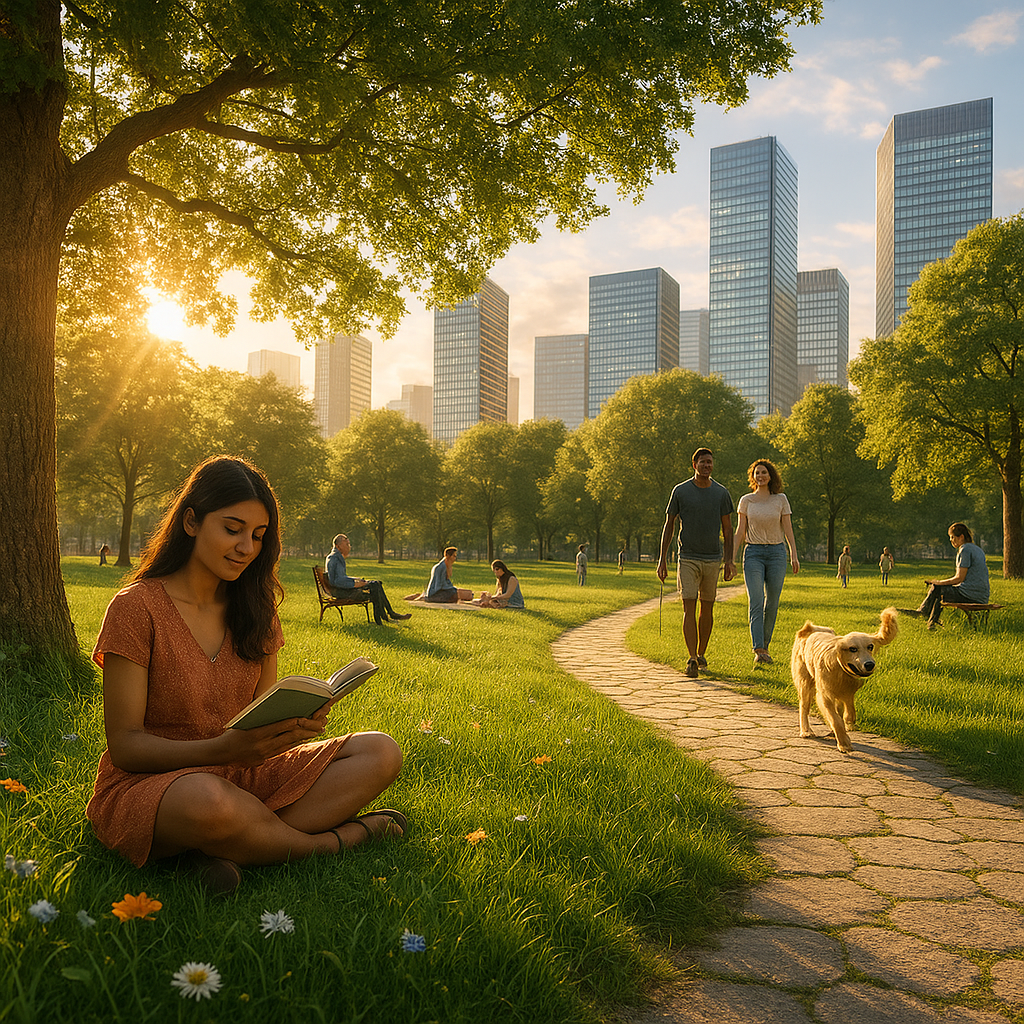
Nature in cities doesn’t just affect individuals in isolation — it shapes how communities function. Parks, green corridors, and shared gardens create the kind of informal social infrastructure that urban sociologists describe as third places: spaces that are neither home nor work, where spontaneous human interaction happens.
Research from the University of Illinois found that residents of public housing with access to green common areas had stronger social ties, greater community cohesion, and lower rates of violence than those in equivalent housing without green space. The natural environment, it seems, encourages people to slow down, linger, and engage with one another in ways that sterile concrete spaces simply don’t.
Community gardens and urban growing projects take this a step further, combining the benefits of nature with purposeful activity and collective endeavour. Across UK cities, from Bristol to Glasgow, these spaces have become hubs not just for growing food but for tackling loneliness, supporting mental health recovery, and building cross-cultural relationships.
The 7 Principles of Nature — and Why They Matter for Urban Life
The concept of the seven principles of nature — sometimes referred to in ecological and philosophical contexts — generally includes ideas such as interdependence, diversity, balance, adaptation, cyclical processes, energy flow, and self-organisation. While different frameworks use slightly different terminology, the common thread is an understanding of natural systems as dynamic, interconnected, and resilient.
Why does this matter for urban living? Because cities that are designed with these principles in mind tend to be more liveable, more sustainable, and better for human health. A city that incorporates diverse green spaces (diversity), connects them through wildlife corridors (interdependence), and uses natural processes to manage water and heat (cyclical processes and balance) is fundamentally more aligned with human biological needs than one that treats nature as an afterthought.
Urban planners and architects are increasingly drawing on these principles through concepts like biophilic design — the intentional incorporation of natural elements into built environments — and nature-based solutions, which use ecosystems to address urban challenges like flooding, air pollution, and heat islands.

Small Changes, Real Impact: Bringing More Nature into Daily Life
Not everyone has the luxury of living near a park or having a garden. But the research suggests that even small, everyday interactions with nature can have meaningful effects. Some practical ways to increase nature contact in urban settings include:
- Walking through green routes rather than the quickest road route, even if it adds a few minutes
- Keeping houseplants — studies suggest indoor plants can reduce stress and improve air quality
- Spending time near water — rivers, canals, and fountains have their own calming effect, sometimes called the “blue mind” phenomenon
- Eating outside in green spaces when the weather allows
- Joining a community garden or simply growing herbs on a windowsill
- Noticing the nature already present — birds, clouds, seasonal changes in street trees — as a form of mindful attention
These are not dramatic interventions. But accumulated over time, they contribute to the kind of regular nature contact that supports sustained well-being and resilience.
Nature Exposure and Mental Health: What the Statistics Tell Us
The data on nature and mental health is increasingly hard to ignore. A large-scale study published in Scientific Reports analysed data from over 20,000 people and found that spending at least 120 minutes per week in natural settings was associated with significantly better health and wellbeing. Interestingly, the benefits plateaued beyond that threshold — suggesting that consistent, moderate exposure matters more than occasional large doses.
In the UK, the mental health charity Mind has long advocated for what it calls ecotherapy — structured activities in natural settings as part of mental health treatment. The evidence base for these approaches continues to grow, and some NHS trusts now incorporate green social prescribing into their services, referring patients to nature-based activities as part of their care.
Meanwhile, a 2019 study published in Nature Plants found that people living in areas with more urban greenery reported greater life satisfaction, even after controlling for income, employment, and other socioeconomic factors. This aligns with broader research on how environment shapes mood and mindset in ways that socioeconomic factors alone cannot explain. Nature, in other words, contributes something to quality of life that money alone cannot replicate.
Conclusion
Urban nature is not a decorative feature of city life — it is a structural one. The evidence from neuroscience, public health, ecology, and social research points consistently in the same direction: human beings are healthier, happier, and more connected when they have meaningful access to natural environments.
As cities continue to grow and the pressures of modern life intensify, the integration of nature into urban spaces becomes an increasingly urgent priority — not just for environmental reasons, but for deeply human ones. Green spaces reduce stress and support mental health. Trees lower cortisol and cool city streets. Community gardens build social cohesion. Even a single plant on a windowsill can shift the quality of a day.
Whether you’re a city planner, a parent, a commuter, or simply someone trying to feel a little more grounded in a busy world, the message from the science is clear: nature isn’t something separate from everyday life. It’s central to it.


