Your gut is home to roughly 38 trillion microorganisms — a bustling internal ecosystem that influences everything from your mood to your metabolism. But perhaps its most underappreciated role is as the headquarters of your immune system. Around 70 to 80 per cent of your immune cells reside in the gut, and the food you eat directly shapes how well they function. This is where fermented foods come in.
Fermentation is hardly a wellness fad. Humans have been fermenting food for over 9,000 years, originally as a preservation method long before refrigeration existed. What’s changed is our understanding of why these foods are so beneficial. Modern research now reveals a fascinating chain of events that unfolds inside your digestive tract when you eat a spoonful of sauerkraut or sip a glass of kefir — events that can genuinely strengthen your immune defences.
So what actually happens inside your gut when you eat fermented foods? Let’s break it down.
What Are Fermented Foods, Exactly?
Fermentation occurs when microorganisms — typically bacteria or yeast — break down carbohydrates like sugars and starch into acids, gases, or alcohol. This process transforms the food in remarkable ways: milk becomes tangy yoghurt, cabbage becomes crunchy kimchi, and tea becomes fizzy kombucha.
Crucially, many fermented foods contain live microorganisms (probiotics), though not all do. Sourdough bread and most beers, for instance, are fermented but contain no live cultures by the time you consume them. The foods that matter most for immunity are those that deliver living microbes to your gut — think live yoghurt, kefir, unpasteurised sauerkraut, kimchi, miso, and tempeh.
The Gut–Immune System Connection
To understand why fermented foods matter, you first need to appreciate just how intertwined your gut and immune system really are.
Your Gut Is an Immune Training Ground
The lining of your intestines is in constant contact with the outside world — every meal introduces new bacteria, proteins, and potential pathogens. Your gut-associated lymphoid tissue (GALT) acts as a surveillance system, teaching immune cells to distinguish between friend and foe. A diverse, well-fed microbiome helps this training process run smoothly.
The Microbiome as a Protective Barrier
Beneficial gut bacteria physically occupy space along your intestinal wall, leaving little room for harmful pathogens to take hold. They also produce antimicrobial compounds and strengthen the tight junctions between intestinal cells — the microscopic seals that prevent unwanted substances from leaking into your bloodstream (a phenomenon sometimes called “leaky gut”).
Short-Chain Fatty Acids: The Unsung Heroes
When gut bacteria ferment dietary fibre, they produce short-chain fatty acids (SCFAs) such as butyrate, acetate, and propionate. These compounds are powerful immune modulators. Butyrate, in particular, helps regulate inflammation and supports the production of regulatory T-cells — the peacekeepers of your immune system that prevent it from overreacting.
What the Science Says About Fermented Foods and Immunity
The evidence linking fermented foods to improved immune function has grown considerably in recent years, and some of the findings are genuinely striking.
The Stanford Study That Made Headlines
In 2021, researchers at Stanford University published a landmark study in the journal Cell comparing a high-fibre diet with a diet rich in fermented foods. Over 10 weeks, participants eating six servings of fermented foods daily — including yoghurt, kefir, kimchi, and kombucha — showed a measurable increase in microbiome diversity and a decrease in 19 inflammatory markers, including interleukin-6, which is linked to chronic inflammatory conditions.
Interestingly, the high-fibre group didn’t see the same reduction in inflammation during the study period, suggesting fermented foods may offer unique immune benefits beyond simply feeding existing gut bacteria.
Reduced Risk of Respiratory Infections
A 2015 Cochrane review analysing 12 randomised controlled trials found that probiotics were associated with a reduced incidence of upper respiratory tract infections. While the review looked at probiotic supplements rather than foods specifically, many fermented foods contain the same bacterial strains — particularly Lactobacillus and Bifidobacterium species.
Chronic Inflammation and Disease Risk
Low-grade chronic inflammation underpins many modern diseases, from type 2 diabetes to cardiovascular disease. By improving gut barrier function and modulating immune responses, a diet regularly including fermented foods may help keep this silent inflammation in check.
The Best Fermented Foods for Gut Health and Immunity
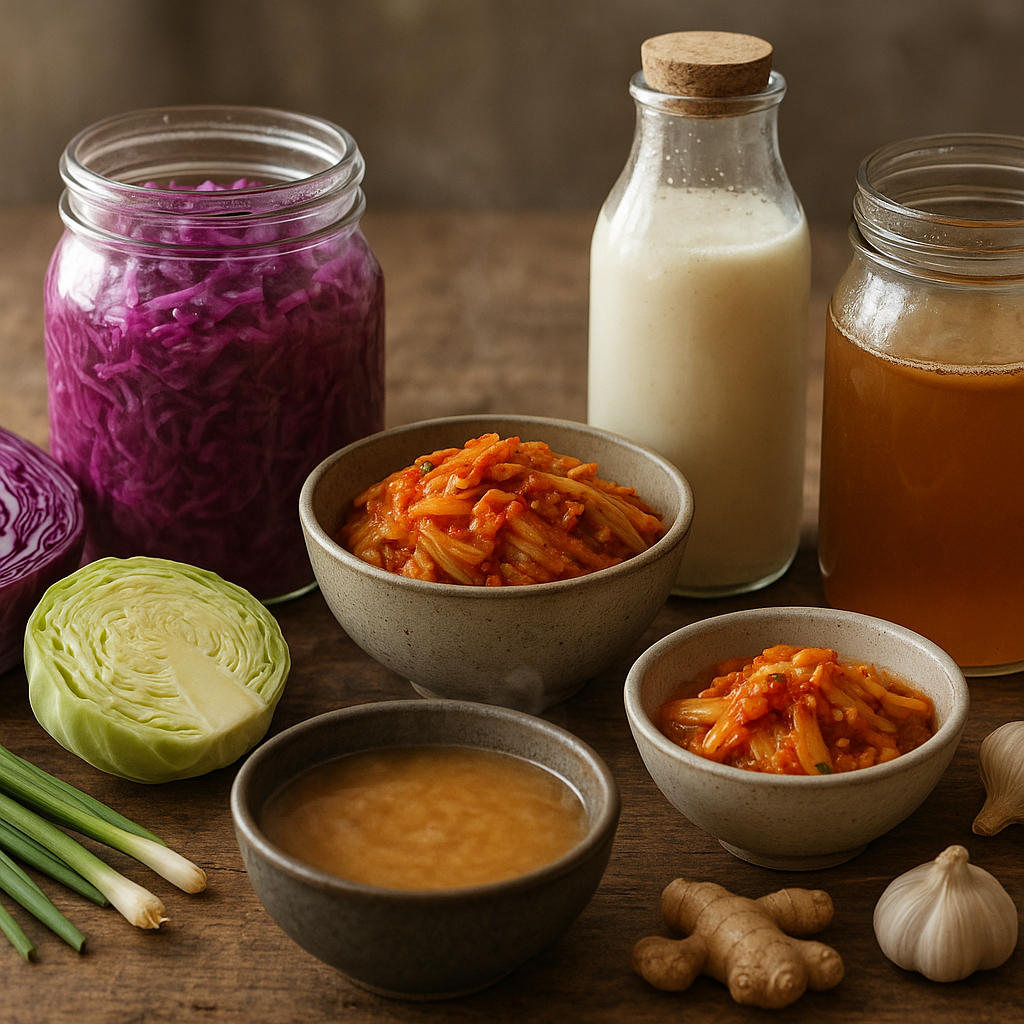
Not all fermented foods are created equal. Here’s a practical fermented foods list for gut health, ranked by the strength of evidence and live culture content:
- Kefir — This fermented milk drink contains up to 61 strains of bacteria and yeasts, making it one of the most diverse probiotic sources available. Studies suggest it may have antibacterial, anti-inflammatory, and even anti-allergic properties.
- Live yoghurt — Look for labels stating “live” or “active cultures”. Greek yoghurt and natural yoghurt with Lactobacillus bulgaricus and Streptococcus thermophilus are solid everyday choices.
- Kimchi — This Korean staple of fermented vegetables (usually cabbage and radish) is rich in Lactobacillus species, plus vitamins A, C, and K. Research has linked regular kimchi consumption to improved immune markers.
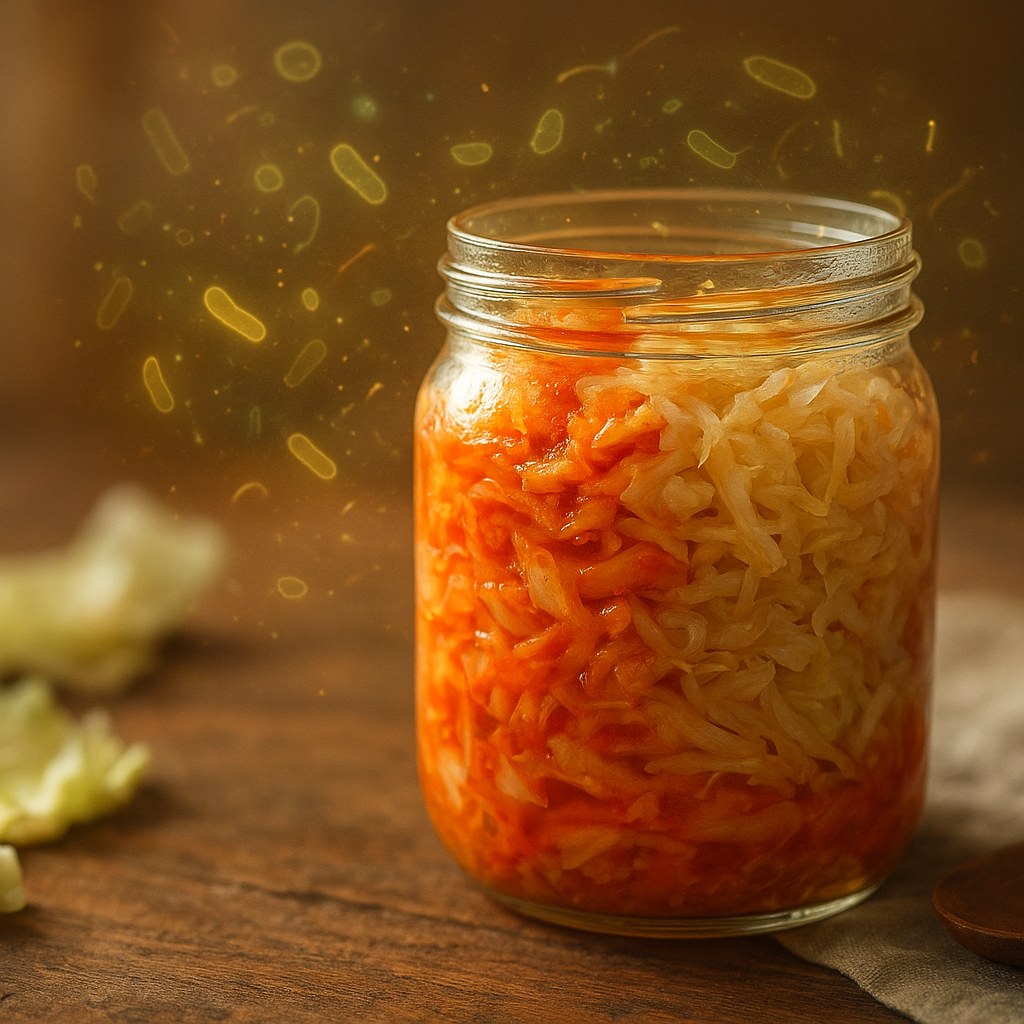
- Sauerkraut — Unpasteurised sauerkraut (found in the refrigerated section, not the shelf-stable jars) delivers live cultures alongside fibre and vitamin C. Pasteurisation kills the beneficial bacteria, so check labels carefully.
- Miso — This Japanese fermented soybean paste contains Aspergillus oryzae and various lactic acid bacteria. Add it to soups after cooking, as boiling destroys live cultures.
- Tempeh — Fermented soybeans pressed into a firm cake, tempeh offers probiotics alongside a complete protein source, making it particularly valuable for plant-based diets.
- Kombucha — Fermented tea containing yeasts and acetic acid bacteria. Choose varieties with lower sugar content, as some commercial brands are surprisingly sweet.
- Natto — Fermented soybeans with a distinctive texture, natto contains Bacillus subtilis and is exceptionally rich in vitamin K2, which supports immune and cardiovascular health.
How to Add Fermented Foods to Your Diet (Without Overdoing It)
If you’re new to fermented foods, the golden rule is to start slowly. Introducing large quantities of live bacteria overnight can cause temporary bloating and digestive discomfort as your microbiome adjusts.
A Sensible Starting Plan
- Week one: Begin with one small serving daily — a couple of tablespoons of sauerkraut or a small pot of live yoghurt.
- Weeks two to four: Gradually increase to two or three servings across different food types. Variety matters, because different fermented foods introduce different bacterial strains.
- Ongoing: Aim for diversity rather than volume. The Stanford study used six servings daily, but even two or three servings appears beneficial for most people.
Practical Tips
- Add a spoonful of kimchi to grain bowls, eggs, or sandwiches.
- Swap your morning yoghurt for kefir, or blend kefir into smoothies.
- Stir miso into salad dressings or marinades rather than only using it in soup.
- Always buy refrigerated, unpasteurised versions where live cultures matter.
- Pair fermented foods with prebiotic fibre (onions, garlic, leeks, bananas, oats) to feed the beneficial bacteria you’re introducing.
Who Should Not Eat Fermented Foods?
Despite their benefits, fermented foods aren’t suitable for everyone, and it’s worth understanding the potential dangers of fermented foods for certain groups.
People with Histamine Intolerance
Fermentation produces histamine, and aged or fermented foods are among the richest dietary sources. Those with histamine intolerance may experience headaches, flushing, hives, or digestive upset after eating aged cheeses, sauerkraut, or kombucha.
Those with Compromised Immune Systems
People undergoing chemotherapy, organ transplant recipients on immunosuppressants, or those with severely compromised immunity should consult their medical team before consuming live-culture foods. In rare cases, probiotic bacteria can cause infections in vulnerable individuals.
People with SIBO
Small intestinal bacterial overgrowth (SIBO) can sometimes be aggravated by fermented foods, as introducing more bacteria into an already overpopulated small intestine may worsen bloating and discomfort.
Those Watching Sodium Intake
Many fermented foods — particularly kimchi, miso, and sauerkraut — are high in salt. If you’re managing hypertension or kidney disease, factor this into your daily sodium allowance.

Pregnant Women
Unpasteurised fermented products carry a small risk of harbouring harmful bacteria such as Listeria. Pregnant women are generally advised to stick with pasteurised fermented foods or commercially produced options with strict safety controls.
Can Fermented Foods Be Bad for Gut Health?
For most healthy people, fermented foods are overwhelmingly beneficial. However, context matters. Excessive consumption can cause bloating and gas, particularly in the early stages. Commercially produced kombucha can be high in sugar, and some shop-bought “fermented” products are pasteurised or vinegar-pickled, offering no probiotic benefit at all.
The key is quality and moderation. Fermented foods should complement a varied, fibre-rich diet — not replace it. Think of them as one instrument in an orchestra rather than a solo performance.
Frequently Asked Questions
How long does it take for fermented foods to improve gut health?
Changes in gut bacteria can begin within days of dietary shifts, but meaningful improvements in microbiome diversity and inflammatory markers typically emerge over several weeks of consistent consumption. The Stanford study ran for 10 weeks, which is a reasonable timeframe to expect noticeable effects.
Are probiotic supplements as good as fermented foods?
Fermented foods offer a broader range of bacterial strains alongside beneficial compounds produced during fermentation, such as organic acids and bioactive peptides. Supplements can be useful in specific clinical situations, but whole foods generally provide a more complete package.
Can I make fermented foods at home?
Absolutely. Sauerkraut, kimchi, kefir, and yoghurt are all achievable in a home kitchen with basic equipment. Follow tested recipes carefully, maintain scrupulous hygiene, and use the correct salt ratios to ensure safe fermentation.
Conclusion
The relationship between fermented foods and immunity is one of the most compelling areas of modern nutritional science. Inside your gut, these foods introduce beneficial microbes, increase microbiome diversity, strengthen the intestinal barrier, and help regulate inflammation — all of which contribute to a more resilient immune system.
The evidence suggests that consistency and variety matter more than any single “superfood”. A daily spoonful of sauerkraut here, a glass of kefir there, some miso in your cooking — these small, sustainable habits add up over time. Start slowly, choose unpasteurised options where possible, and pay attention to how your body responds.
Your gut has been fermenting alongside humanity for millennia. Giving it the raw materials it needs to do its job properly might be one of the simplest, most delicious investments you can make in your long-term health.